English



















































































































































































RBI Holds Repo Rate Steady at 5.5 Percent, Signals Cautious Optimism for FY26

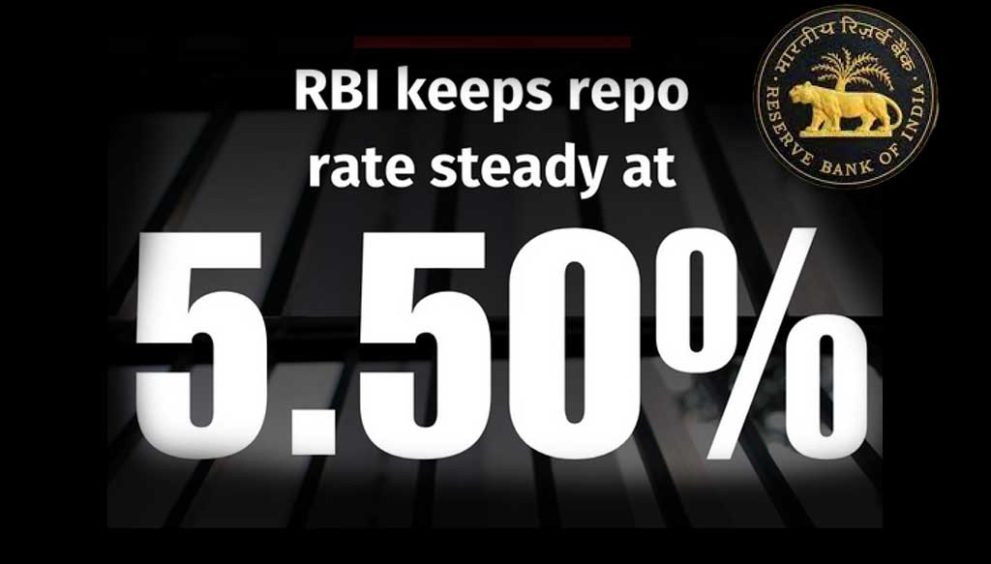
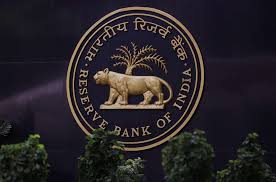
Mumbai, August 6, 2025 – The Reserve Bank of India (RBI) announced today that it will maintain the repo rate at 5.5 percent, as decided in its Monetary Policy Committee (MPC) meeting held from August 5–7, 2025. This decision, marking the first time this year the RBI has opted to keep rates unchanged, reflects a balanced approach to fostering economic growth while navigating global uncertainties and moderating inflation. The central bank also revised its Consumer Price Index (CPI) inflation forecast for the financial year 2025-26 (FY26) downward to 3.1 percent from 3.7 percent, while retaining its GDP growth projection at 6.5 percent.
Key Highlights of the RBI’s August 2025 Monetary Policy
- Repo Rate Unchanged: The MPC, chaired by RBI Governor Sanjay Malhotra, unanimously decided to keep the repo rate steady at 5.5 percent, following a series of cuts earlier in the year that brought the rate down from 6.5 percent to its current level.
- Inflation Forecast Revised: The RBI significantly lowered its FY26 CPI inflation forecast to 3.1 percent, driven by softer food prices, favorable base effects, and declining global commodity costs. Notably, Q2 FY26 inflation is projected at a low 2.1 percent, though it is expected to rise to 4.9 percent in Q1 FY27 as the base effect fades.
- GDP Growth Steady: The RBI maintained its real GDP growth forecast for FY26 at 6.5 percent, with quarterly projections of 6.5 percent for Q1, 6.7 percent for Q2, 6.6 percent for Q3, and 6.3 percent for Q4. This reflects confidence in resilient domestic demand, government capital spending, and improving rural consumption.
- Neutral Policy Stance: The MPC retained its neutral stance, allowing flexibility to respond to evolving economic conditions while prioritizing price stability and growth.
- Global Uncertainties: Governor Malhotra highlighted persistent geopolitical tensions and trade-related uncertainties, including recent U.S. tariff hikes, as key risks to global and domestic growth. Despite these challenges, India’s economy remains robust, supported by strong domestic drivers.
Context and Rationale Behind the Decision
The RBI’s decision to hold the repo rate steady comes after a series of proactive rate cuts in 2025, totaling 100 basis points, with the most recent being a 50-basis-point reduction to 5.5 percent in June 2025. These cuts were aimed at stimulating growth amid a benign inflation environment, with retail inflation dropping to 2.1 percent in June 2025—the lowest since January 2019—and remaining below the RBI’s 4 percent target for five consecutive months.
Governor Malhotra emphasized that the revised inflation outlook provides room for cautious optimism. “The inflation outlook has become more benign, supported by favorable food price dynamics and easing global commodity costs,” he said during the announcement. However, he cautioned that near-term challenges, such as global trade frictions and weather-related uncertainties, necessitate a prudent approach.
The decision to maintain the repo rate aligns with the RBI’s neutral stance, adopted in June 2025 after shifting from an accommodative stance in April. This shift signals a balanced approach, focusing on sustaining growth while remaining vigilant about potential inflationary pressures, particularly as inflation is projected to climb toward 4.9 percent in early FY27.
Economic Outlook for FY26
The RBI’s steady GDP growth projection of 6.5 percent for FY26 reflects confidence in India’s domestic economic resilience despite global headwinds. Key factors supporting this outlook include:
- Rural and Urban Demand: Rural consumption is expected to strengthen due to above-normal monsoon forecasts, boosting agricultural output. Urban demand is also improving, driven by rising consumer confidence and government initiatives.
- Investment Revival: Investment activity is showing signs of recovery, supported by government capital expenditure and policy measures like the Production Linked Incentive (PLI) scheme.
- Service Sector Strength: Robust services exports and steady performance in the services sector continue to bolster economic growth.
- Stable External Sector: India’s foreign exchange reserves, at $691.5 billion as of June 2025, provide over 11 months of import cover, ensuring external stability. The current account deficit is expected to remain within sustainable levels.
However, the RBI flagged downside risks, including global trade tensions—exacerbated by recent U.S. tariffs on India—and potential disruptions from geopolitical conflicts and weather vagaries. “Trade policy uncertainty continues to weigh on merchandise export prospects,” Malhotra noted, referencing the impact of a 26 percent U.S. tariff on India, which could shave 0.5 percentage points off FY26 GDP growth, according to HSBC estimates.
Implications for Borrowers, Investors, and Sectors
The decision to hold the repo rate at 5.5 percent means that external benchmark lending rates (EBLR) linked to the repo rate will remain unchanged, offering no immediate relief to borrowers. However, loans linked to the marginal cost of funds-based lending rate (MCLR) may see adjustments based on individual bank policies. The steady rate environment is expected to maintain stability in equated monthly installments (EMIs) for home, auto, and business loans.
For investors, the RBI’s actions signal a stable economic outlook. The bond market is likely to remain steady, as bond yields have already adjusted to recent rate cuts, with the 10-year bond yield stabilizing at around 6.16 percent. Sectors such as banking, non-banking financial companies (NBFCs), real estate, and automobiles are expected to benefit from sustained low borrowing costs and improved liquidity following the earlier 100-basis-point cash reserve ratio (CRR) cut in June, which released ₹2.5 lakh crore into the financial system.
Expert Reactions
Analysts have praised the RBI’s measured approach. Vikas Garg, Head of Fixed Income at Invesco Mutual Fund, noted, “The RBI’s decision to hold rates reflects a well-calibrated balance between growth and stability, with the neutral stance allowing flexibility to respond to data-driven developments.” Ajit K. Menon, Chief Operating Officer at Vivriti Capital, added, “The steady GDP growth forecast and lower inflation projections signal confidence in domestic demand, which should support credit growth in key sectors like real estate and NBFCs.”
Looking Ahead
The RBI’s next MPC meeting is scheduled for October 7–9, 2025, where it will reassess economic indicators, including inflation trends, global trade dynamics, and domestic growth momentum. With inflation projected to remain below the 4 percent target for FY26 and GDP growth expected to hold steady, the RBI is well-positioned to maintain its neutral stance unless significant external or domestic shocks arise.
The central bank’s cautious yet optimistic outlook underscores its commitment to fostering sustainable growth while keeping inflation in check. As India navigates a complex global environment, the RBI’s steady hand is likely to provide a stable foundation for economic resilience in FY26.
Disclaimer: This article is for informational purposes only and should not be considered financial advice. Please consult a certified financial advisor before making any investment or borrowing decisions.
Sources: Reserve Bank of India, Business Standard, The Indian Express, CNBC-TV18, Press Information Bureau